

Autonomy, Disability, and Reproductive Justice: A Scoping Review of Barriers to Reproductive and Perinatal Health Care for Autistic People
Paper in Press, 27 August 2026
Maria Teresa Moreira, Andreia Lima, Christina César Praça Brasil, Vânia Peixoto, and Rita Alegria
Abstract
Autistic people experience systematic exclusion within health care systems organized around neurotypical norms, raising significant concerns regarding autonomy, nondiscrimination, and the realization of reproductive rights. Reproductive and perinatal health care represents a particularly sensitive domain in which barriers related to communication, sensory environments, and decision-making processes may undermine autistic people’s ability to exercise informed choice and reproductive autonomy. Following the Joanna Briggs Institute methodology and the PRISMA-ScR reporting guidelines, we conducted a systematic search of four electronic databases and identified only seven studies that met the eligibility criteria, demonstrating the limited evidence currently available. Across the included studies, the evidence suggests that many barriers are structural rather than individual. These barriers include inaccessible communication practices, sensory-hostile clinical environments, fear of stigma associated with disclosing autism, a lack of reasonable adjustments, and inflexible service models. The studies linked these barriers to distress, reduced participation in decision-making, diminished trust in health care providers, and, in some cases, avoidance of care. Only one study directly examined abortion access for autistic people, highlighting a substantial gap in the empirical evidence despite abortion’s relevance to reproductive rights and justice. The findings underscore the need for rights-based, autism-affirming reproductive and perinatal health care systems that actively dismantle structural barriers, embed reasonable accommodations as standard practice, and uphold autistic people’s autonomy and reproductive rights across the continuum of care.
Introduction
Access to sexual, reproductive, and perinatal health care—including pregnancy care, care following pregnancy loss, and abortion—is widely recognized as a fundamental component of the right to health and bodily autonomy. International human rights standards affirm that access to such care must be available, accessible, acceptable, and of adequate quality, without discrimination on the basis of disability or other social characteristics.
Despite these commitments, persistent inequities continue to shape access to reproductive health care for marginalized populations, particularly people with disabilities. The Convention on the Rights of Persons with Disabilities recognizes the right of persons with disabilities to the highest attainable standard of health without discrimination, while international human rights standards also affirm access to sexual and reproductive health care as an integral component of this right.[1]
Evidence from international public health research indicates that adolescents and adults with disabilities experience significant barriers to reproductive health care, including reduced access to contraception, lower utilization of gynecologic and obstetric services, and poorer quality of care when compared to non-disabled populations.[2] These inequities are rooted in health care systems that fail to accommodate diverse communication styles, sensory needs, and decision-making preferences, rather than in individual health needs alone.
Within this broader landscape, autistic adolescents and adults represent a population exposed to compounded and intersecting vulnerabilities. A growing body of literature documents systemic barriers faced by autistic people in health care settings, including inaccessible communication practices, sensory-hostile clinical environments, limited autism-specific training among health care professionals, and the absence of standardized reasonable adjustments.[3] These barriers frequently undermine informed consent, limit participation in decision-making, and contribute to delayed care-seeking, reduced trust in health care systems, and unmet health needs.
Reproductive and perinatal health care constitutes a particularly sensitive domain in which these systemic barriers may have profound consequences. Decisions related to pregnancy, pregnancy loss, and abortion are often time-sensitive, emotionally complex, and legally regulated, increasing the risk that autistic people’s autonomy and reproductive rights may be compromised. Studies examining pregnancy and perinatal care consistently show that autistic individuals report lower satisfaction with care, reduced involvement in decision-making, and heightened anxiety and distress during health care encounters.[4]
Autistic people, particularly women and gender-diverse individuals, experience disproportionately high rates of interpersonal and sexual violence, which may have important implications for reproductive health care needs.[5] However, empirical evidence specifically examining how these experiences influence access to reproductive and perinatal health care remains limited.[6]
Comparative international research demonstrates that even in contexts where abortion is legally permitted, survivors of sexual violence frequently encounter practical and systemic barriers, including mandatory reporting requirements, gestational limits, limited provider availability, and stigma within health care systems.[7] Global guidance emphasizes that access to abortion care should be timely, nondiscriminatory, and free from unnecessary procedural obstacles, particularly for survivors of violence.[8] Emerging analyses suggest that recent legal developments restricting abortion access have further exacerbated existing inequities, disproportionately affecting marginalized groups, including people with disabilities.[9]
Access to abortion constitutes an important component of reproductive autonomy and reproductive rights.[10] However, empirical evidence on reproductive and perinatal health care among autistic people remains fragmented, with important gaps concerning reproductive autonomy and abortion care.[11] This review uses a rights-based and disability-informed perspective to map the evidence on reproductive and perinatal health care among autistic people, identify structural barriers and knowledge gaps, and guide future research and policy, as well as the development of autism-affirming care.
Methodology
This scoping review was conducted in accordance with the Joanna Briggs Institute methodology for scoping reviews and is reported in accordance with the Preferred Reporting Items for Systematic Reviews and Meta-Analyses Extension for Scoping Reviews (PRISMA-ScR).[12] We selected this methodological approach in order to map a complex, multidisciplinary, and underexplored body of literature characterized by conceptual heterogeneity, emerging evidence, and diverse study designs, consistent with the exploratory and rights-oriented aims of this review.
This review presents a predefined thematic synthesis derived from a broader scoping review protocol prospectively registered on the Open Science Framework (DOI: 10.17605/OSF.IO/845QW). The parent scoping review was designed to examine the health care experiences of autistic people across multiple clinical settings using a deliberately broad search strategy. The current manuscript reports the predefined subset of evidence relating specifically to reproductive and perinatal health care.
Search strategy
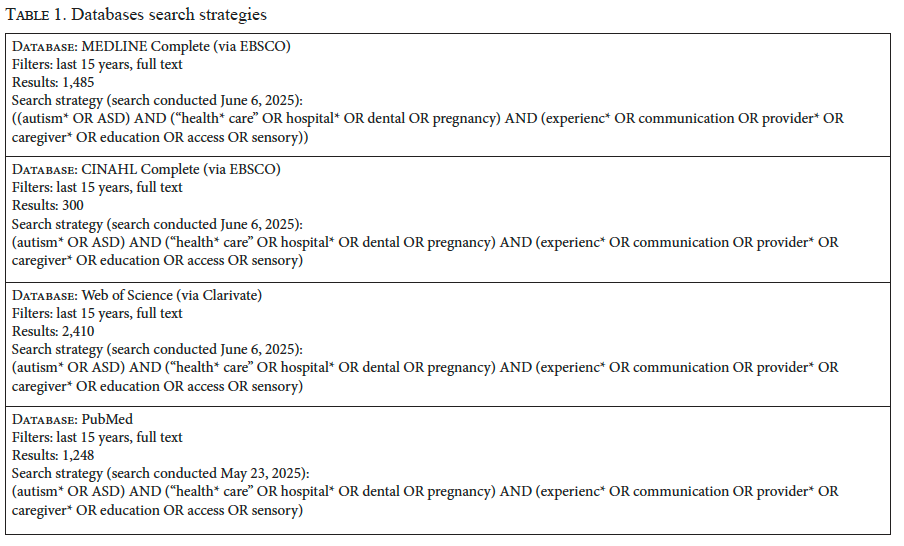
We conducted a comprehensive and systematic literature search across four electronic databases: PubMed, Web of Science (via Clarivate), CINAHL Complete (via EBSCO), and MEDLINE Complete (Via EBSCO) (Table 1). The search strategy combined controlled vocabulary (including medical subject headings where applicable) and free-text keywords related to autism, reproductive health, perinatal care, abortion access, sexual violence, autonomy, and health care barriers. We used Boolean operators to maximize sensitivity while maintaining conceptual relevance.
The search strategy was deliberately designed to capture the health care experiences of autistic individuals across a broad range of clinical settings, consistent with the scope of the parent scoping review. The present manuscript reports a predefined thematic synthesis focused specifically on reproductive and perinatal health care. Consequently, studies concerning other health care settings identified through the broader search strategy were excluded during screening in accordance with the eligibility criteria established for this thematic analysis.
We adapted the search strategy to the indexing system of each database. To capture qualitative, quantitative, mixed-methods, legal, ethical, and policy-oriented literature relevant to reproductive and perinatal health care access, we did not impose any restrictions on study design. The searches were limited to studies published between 2010 and 2025 in English, Portuguese, or Spanish.
Eligibility criteria
Eligibility criteria were defined using the population, concept, and context framework recommended by the Joanna Briggs Institute.[13]
Population: autistic adolescents and adults, including individuals with a formal diagnosis and those who self-identified as autistic. Studies involving caregivers or health care professionals were included where findings explicitly related to autistic individuals’ experiences or access to care.
Concept: barriers, facilitators, experiences, and support needs related to reproductive and perinatal health care, including pregnancy, pregnancy loss, abortion access, reporting of sexual violence, and decision-making following rape-related pregnancy.
Context: any health care, legal, or social setting internationally, encompassing countries with liberal, restrictive, or mixed abortion legislation. Opinion pieces without empirical or analytical grounding were excluded, as were studies focused exclusively on pediatric populations or health care contexts not relevant to reproductive or perinatal care.
Study selection
To minimize selection bias, two reviewers independently screened titles and abstracts against the predefined eligibility criteria. Full-text articles were subsequently assessed independently using the same process. Disagreements at any stage were resolved through discussion and consensus, with consultation of a third reviewer when necessary. Although we did not calculate a formal measure of inter-reviewer agreement, independent screening and consensus-based resolution were used to enhance the reliability and transparency of the study selection process.
Data extraction and synthesis
We extracted data using a structured extraction form designed to capture authorship, year of publication, country, study design, population characteristics, health care and legal context, and key findings related to autonomy, access, and structural barriers in reproductive and perinatal health care.
We synthesized the extracted data using an inductive thematic analytical approach. Following data extraction, two reviewers independently examined the findings from the included studies to identify recurring concepts related to autonomy, rights, and access to reproductive and perinatal health care. Similar concepts were grouped into preliminary descriptive categories, which were subsequently discussed, refined, and organized into broader analytical themes through an iterative process of comparison and consensus. The final themes reflected patterns consistently reported across the included studies while remaining closely grounded in the original data.
This analytical approach supported an ecological and rights-based interpretation of health care access by recognizing that barriers to reproductive and perinatal care for autistic people are shaped primarily by health care system design, policy environments, and institutional practices rather than individual characteristics.
Ethical considerations
Ethical approval was not required for this study, as it is based exclusively on the analysis of published literature and did not involve human participants, human material, or identifiable human data.
Results
Study selection
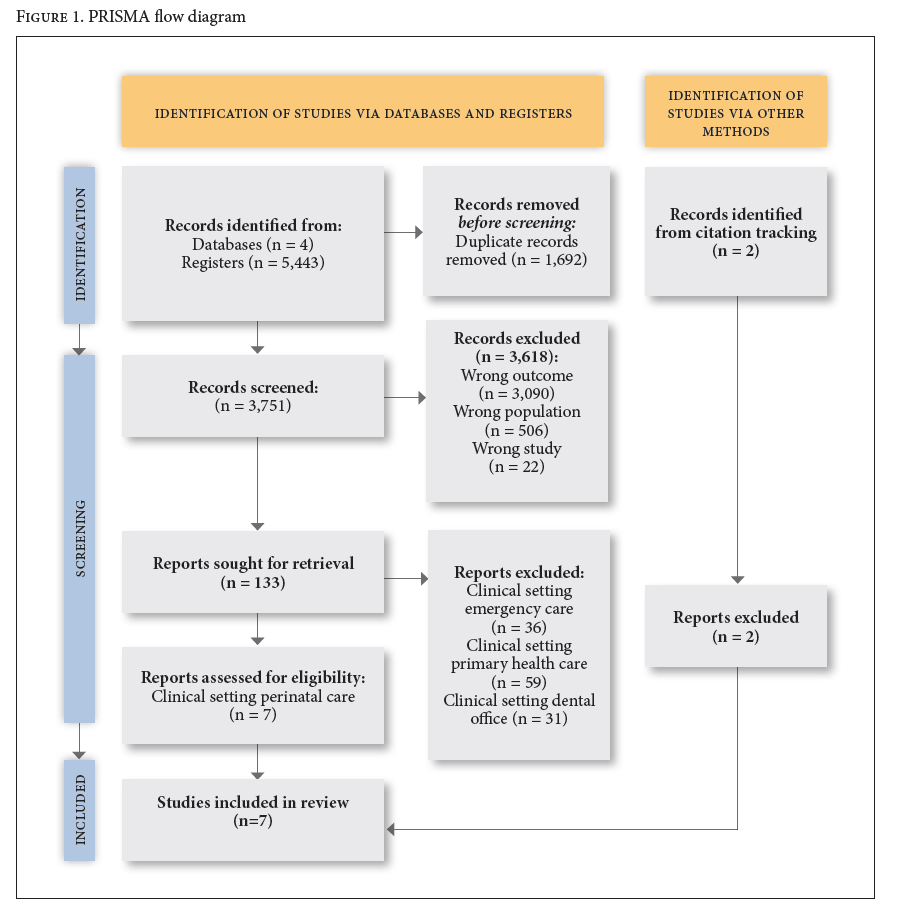
Figure 1 summarizes the study selection process. We identified 5,443 records through database searches, as well as two additional records through citation tracking. After removing 1,692 duplicates, we screened 3,751 records by title and abstract.
Because this manuscript presents a predefined thematic synthesis derived from a broader scoping review, Figure 1 depicts the selection process of the parent review and the subsequent identification of studies addressing reproductive and perinatal health care for inclusion in the present analysis.
During the screening phase, 3,618 records were excluded, primarily because they were irrelevant to the review objectives. The most common reasons for exclusion were ineligible outcome (n = 3,090), population (n = 506), and study type (n = 22). Following this process, we assessed 133 full-text articles for eligibility.
Of these, the majority were excluded because they addressed health care contexts outside the scope of this review, such as emergency care, primary care, or dental services. The two reports identified through citation tracking were also excluded for failing to meet the eligibility criteria. Seven studies conducted within reproductive and perinatal health care contexts were included in the final synthesis.
Study characteristics
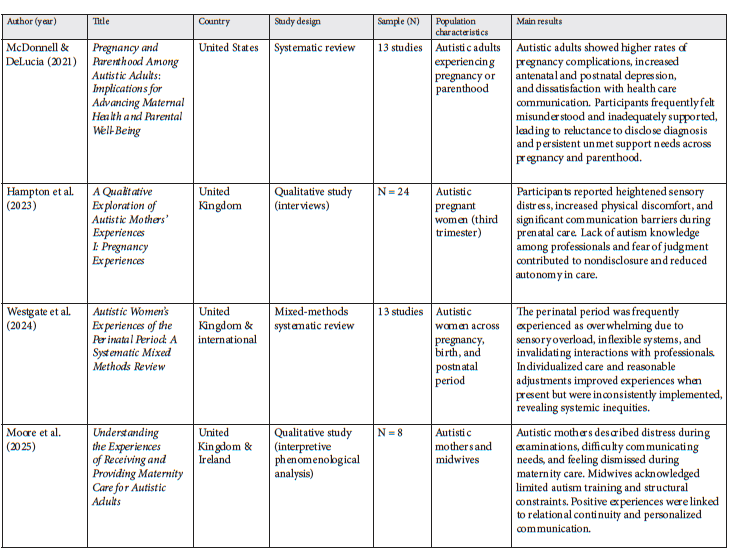
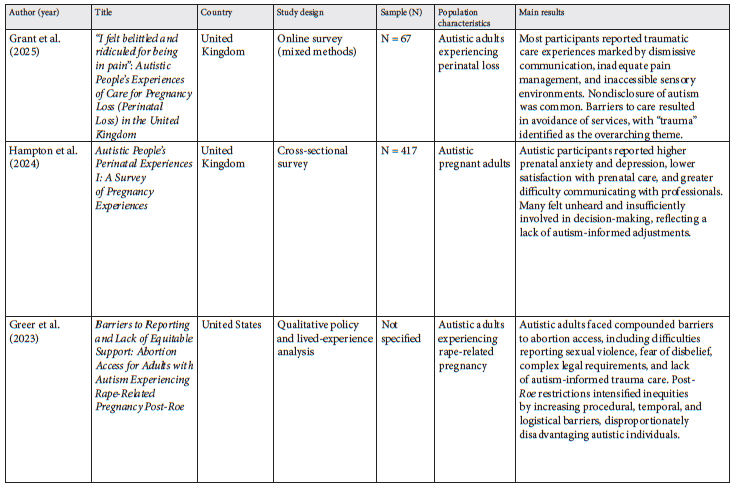
The seven included sources were published between 2020 and 2025 and comprised qualitative studies, cross-sectional surveys, mixed-methods research, systematic and mixed-methods reviews, and policy-oriented legal analyses.[14] Most studies were conducted in high-income countries, predominantly the United States and the United Kingdom, and focused on autistic adolescents and adults of reproductive age.
Participant samples were composed largely of women or individuals assigned female at birth, reflecting the focus on pregnancy, perinatal care, and reproductive health. Six studies examined experiences of pregnancy, perinatal care, or pregnancy loss,while one source focused specifically on abortion access from a legal and policy perspective. Table 2 presents a summary of the study characteristics.
TABLE 2: Characteristics and key findings of the included studies
Communication with health care professionals
Across the included studies, communication barriers with health care professionals emerged as a consistent and prominent finding. Autistic participants frequently reported difficulties understanding verbal information, insufficient time to process or ask questions, and limited opportunities to participate in shared decision-making during reproductive and perinatal health care encounters.[15]
Health care interactions were often characterized by rapid information delivery and reliance on neurotypical communication norms. These practices were reported as particularly challenging during antenatal care, labor, and miscarriage management, contributing to feelings of being misunderstood or excluded from decisions affecting care.[16]
Disclosure of autism and access to reasonable adjustments
Reluctance to disclose an autism diagnosis within health care settings was a recurrent theme across the included studies. Participants described concerns that disclosure could result in stigma, disbelief, or negative changes in health care professionals’ attitudes.[17]
Nondisclosure was associated with reduced access to reasonable adjustments, including adapted communication formats, flexible appointment structures, and anticipatory guidance. Participants frequently described navigating pregnancy and perinatal care without accommodations, contributing to dissatisfaction with care and heightened emotional distress.[18]
Sensory environments and emotional distress
Sensory challenges related to reproductive and perinatal health care environments were widely reported. Clinical settings were often described as overwhelming due to lighting, noise, physical examinations, and lack of predictability, particularly during intimate procedures such as gynecologic examinations, labor, and miscarriage care.[19]
Sensory overload was closely linked to anxiety, emotional dysregulation, and reduced capacity for self-advocacy. Participants reported difficulty communicating needs and engaging in decision-making when experiencing sensory distress, further constraining autonomy during care encounters.[20]
Mental health burden and avoidance of care
In the context of pregnancy loss, participants often described care experiences as traumatic, citing dismissive communication, inadequate pain management, and inaccessible clinical environments. Some individuals reported that these experiences led them to delay or avoid subsequent health care, including routine follow-up care.[23]
Structural and systemic barriers
Beyond individual-level experiences, the included studies consistently identified structural barriers embedded within health care systems. These included limited autism-specific training among health care professionals, inflexible service delivery models, time-constrained appointments, and the absence of standardized approaches to reasonable adjustments.[24]
These barriers were observed across health care systems, including those with universal coverage, suggesting that inequities were driven primarily by health care system design rather than by resource availability alone.[25]
Abortion access as an under-represented domain
Only one included source directly examined abortion access for autistic people, focusing on legal and policy barriers in the context of recent legislative changes in the United States.16 This analysis highlighted how legal restrictions, procedural requirements, and health care system complexity may disproportionately affect autistic individuals, particularly in cases of rape-related pregnancy.
No empirical studies were identified that explored autistic individuals’ lived experiences of abortion care. Consequently, conclusions relating to abortion access should be interpreted cautiously.[26]
Summary of findings
Taken together, the available evidence suggests that autistic people may experience recurring structural barriers to reproductive and perinatal health care. Across the included studies, communication barriers, sensory-hostile environments, reluctance to disclose autism, and broader health care system constraints were consistently reported as important themes in pregnancy, perinatal care, and pregnancy loss.[27]
The scarcity of empirical evidence addressing abortion access highlights a critical gap in the literature, underscoring the need for future research examining autistic people’s experiences of abortion care within diverse legal and health care contexts.[28]
Discussion
This scoping review mapped the existing literature on barriers to autonomy, rights, and access in reproductive and perinatal health care for autistic people. The findings demonstrate that autistic individuals experience persistent and systemic barriers across pregnancy, perinatal care, and pregnancy loss, while evidence directly addressing abortion access remains extremely limited and largely policy-based.[29] Across diverse health care contexts, barriers were consistently rooted in communication practices, sensory environments, disclosure-related dynamics, and structural features of health care systems.
Importantly, the findings indicate that inequities in reproductive and perinatal health care for autistic people are primarily attributable not to individual characteristics but to health care systems designed around neurotypical assumptions. This structural interpretation aligns with broader disability and human rights scholarship, which emphasizes that exclusion arises when systems fail to accommodate human diversity rather than from impairment itself.[30]
Communication, autonomy, and informed consent
Communication barriers emerged as a central determinant of reduced autonomy across reproductive and perinatal health care encounters. Autistic participants consistently reported difficulties understanding information, limited opportunity to ask questions, and exclusion from shared decision-making during pregnancy, labor, and miscarriage care.[31] These barriers undermine the right to informed consent, a core component of both ethical medical practice and international human rights standards governing the right to health.[32]
In reproductive health care contexts—where decisions are often time-sensitive, emotionally complex, and legally regulated—inaccessible communication may have particularly serious consequences. When information is delivered rapidly, verbally, or without adaptation to individual processing needs, autistic individuals may be effectively excluded from meaningful participation in decisions that directly affect their bodies and reproductive lives. Such exclusion constitutes not merely a quality-of-care issue but a failure to uphold reproductive autonomy.
These findings are consistent with broader evidence showing that communication barriers are among the most persistent obstacles to health care access for autistic people across primary, specialist, and hospital care. Previous systematic reviews suggest that these barriers often arise from a mismatch between conventional health care communication practices and the communication preferences of autistic individuals, rather than from autism itself. This broader literature supports organizational adaptation and professional training over approaches that place the burden of adjustment on autistic people.[33]
Disclosure, stigma, and reasonable accommodation
Reluctance to disclose an autism diagnosis within health care settings was consistently reported across the included studies.[34] Nondisclosure was not indicative of a lack of need for support but rather a response to anticipated stigma, disbelief, or negative shifts in professional attitudes. This finding reflects broader patterns in disability health care, where disclosure may increase vulnerability without improving access to accommodations.
From a human rights perspective, reliance on individual disclosure to trigger reasonable adjustments is problematic. The right to nondiscrimination requires that health care systems proactively anticipate and accommodate diverse needs instead of placing the burden on individuals to repeatedly justify their entitlement to support.[35] The findings of this review suggest that when reasonable adjustments are treated as optional or exceptional, autistic people are disproportionately excluded from equitable reproductive and perinatal care.
The wider literature similarly indicates that disclosure of an autism diagnosis is often experienced as a complex decision. Although disclosure may facilitate access to reasonable accommodations, autistic adults frequently report concerns regarding stigma, stereotyping, or negative changes in professionals’ attitudes. Consequently, equitable health care requires reasonable accommodations to be routinely embedded within health care systems, without relying solely on patient self-identification.[36]
Sensory environments, distress, and reproductive justice
Sensory-hostile health care environments were widely reported as sources of distress across pregnancy, perinatal care, and pregnancy loss.[37] Clinical spaces characterized by excessive noise, bright lighting, physical invasiveness, and lack of predictability were frequently described as overwhelming, particularly during intimate and vulnerable procedures.
Sensory distress was closely linked to anxiety, emotional dysregulation, and reduced capacity for self-advocacy.[38] In these contexts, the ability to assert preferences, ask questions, or refuse unwanted interventions may be significantly compromised. From a reproductive justice perspective, this raises critical concerns about the conditions under which consent is sought and decisions are made, particularly for individuals already subject to marginalization within health care systems.
Sensory challenges have also been identified across multiple health care contexts, where overstimulating clinical environments contribute to anxiety, communication difficulties, and reduced engagement with health care services. Collectively, these findings suggest that sensory adaptations should be regarded as fundamental accessibility measures rather than optional environmental modifications, particularly during intimate or emotionally demanding health care encounters.[39]
Mental health impacts and avoidance of care
Several studies reported elevated anxiety and depressive symptoms among autistic individuals during pregnancy and the perinatal period.[40] While such outcomes are often framed as comorbidities, the findings of this review suggest that distress is frequently shaped by health care encounters characterized by invalidation, inaccessible communication, and lack of reasonable adjustments.[41]
In the context of pregnancy loss, participants described care experiences as traumatic, citing dismissive communication, inadequate pain management, and inaccessible clinical environments. These experiences were associated with avoidance of subsequent health care, including routine follow-up care. Avoidance of care represents a significant public health concern and reflects cumulative failures of health care systems to provide safe, accessible, and rights-respecting services.
Broader evidence indicates that repeated negative health care experiences may contribute to cumulative psychological distress and subsequent avoidance of health care among autistic adults. Importantly, avoidance behaviors should not necessarily be interpreted as reduced willingness to engage with health care but may instead reflect adaptive responses to environments perceived as inaccessible, unpredictable, or psychologically unsafe.[42]
Structural inequities and system design
Across all included studies, barriers were consistently located at the system level. Limited autism-specific training among health care professionals, inflexible service delivery models, time-constrained appointments, and the absence of standardized approaches to reasonable adjustments were repeatedly identified.[43] These findings suggest that reported inequities may be influenced by features of health care system design rather than by resource availability alone. They support a shift away from individualized, deficit-based explanations toward structural and ecological models of health care access. From a human rights standpoint, states and health care institutions bear responsibility for ensuring that reproductive and perinatal health care systems are accessible and acceptable to all, including autistic people.[44] Failure to redesign systems accordingly risks perpetuating indirect discrimination.
The consistency of these findings across different health care systems suggests that many barriers are structural rather than context-specific. Previous systematic reviews have similarly highlighted inadequate autism-specific training, organizational inflexibility, fragmented care pathways, and insufficient implementation of reasonable accommodations as recurrent determinants of health care inequities experienced by autistic people.[45]
Abortion access within the reproductive care continuum
Only one included source directly addressed abortion access for autistic people, focusing on legal and policy barriers in the post-Dobbs context in the United States.[46] The absence of empirical studies examining autistic individuals’ lived experiences of abortion care represents a critical gap in the literature.
Nevertheless, international guidance makes clear that legal access to abortion does not guarantee practical accessibility, particularly for individuals who require communication support, sensory accommodations, or assistance navigating complex health care and legal systems.[47] The findings of this review suggest that barriers identified across pregnancy and perinatal care—such as inaccessible communication and sensory distress—are likely to have significant implications for abortion care, where access is often time-sensitive and procedurally constrained.
Although empirical evidence specific to abortion care among autistic people remains extremely limited, the broader literature consistently demonstrates that communication barriers, limited accessibility, and difficulties navigating health care systems disproportionately affect autistic people across health care settings. Consequently, rather than permitting firm conclusions regarding abortion care, the present findings primarily identify an important research gap requiring dedicated empirical investigation.[48]
Applying the AAAQ framework to reproductive and perinatal health care
The barriers identified across the included studies can also be interpreted through the availability, accessibility, acceptability, and quality (AAAQ) framework, which operationalizes the right to the highest attainable standard of health under international human rights law.[49] Communication barriers, limited implementation of reasonable accommodations, and difficulties navigating health care services primarily affect accessibility, while sensory-hostile environments and the absence of autism-informed care undermine the acceptability of reproductive health care.[50] In addition, insufficient autism-specific education and training among health care professionals may compromise the quality of care provided to autistic people.[51] Although the included studies did not directly evaluate the availability of reproductive health care services, the limited evidence concerning abortion care among autistic people suggests that the availability of appropriate and accessible services remains an important area requiring further investigation.[52] Interpreting the findings through the AAAQ framework reinforces the notion that equitable reproductive and perinatal health care depends not only on the existence of services but on ensuring that they are available, accessible, acceptable, and of sufficient quality to meet the needs of autistic people, consistent with international human rights obligations under the right to health and the Convention on the Rights of Persons with Disabilities.[53]
Applying the AAAQ framework highlights that many of the barriers identified in this review extend beyond individual clinical encounters and should be understood as systemic issues engaging state obligations to ensure equitable access to reproductive health care for autistic people.[54]
Implications for practice, policy, and research
The findings of this review underscore the need for reproductive and perinatal health care systems that are autism-informed, trauma-sensitive, and grounded in a rights-based approach. At the clinical level, this includes mandatory training for health care professionals on autism in adulthood, neurodiversity-affirming communication, and sensory awareness.[55] Reasonable adjustments should be embedded as standard practice rather than contingent on disclosure or individual negotiation.
From a policy perspective, reproductive health care and abortion frameworks must be evaluated not only on formal legality but on practical accessibility for autistic people. States have an obligation to ensure that reproductive health care services uphold autonomy, informed consent, and nondiscrimination across the reproductive care continuum.[56]
In terms of research, the scarcity of empirical evidence on abortion access for autistic people is an urgent priority. Future studies should adopt participatory and interdisciplinary approaches, center autistic voices, and examine reproductive health care experiences across diverse legal and cultural contexts.[57]
Overall, this review demonstrates that inequities in reproductive and perinatal health care for autistic people are systemic, persistent, and closely linked to health care system design rather than individual impairment. Without the intentional redesign of services to support accessible communication, sensory safety, and meaningful decision-making, autistic individuals will continue to face barriers that undermine their reproductive autonomy and human rights.
Taken together, these findings support a shift from interventions focused exclusively on individual clinicians toward organizational approaches that embed autism-informed communication, sensory adaptations, flexible service delivery, and routine reasonable accommodations. Such system-level approaches are increasingly recognized as essential for reducing health care inequities experienced by autistic people across health care settings.[58]
Limitations
This scoping review should be interpreted in light of several limitations, many of which are inherent to both the scoping review methodology and the current state of the literature in this field.
First, as a scoping review, the purpose of this study was to map the breadth and nature of available evidence rather than to critically appraise methodological quality or synthesize effect sizes. Consequently, the included studies varied substantially in design, sample size, analytical depth, and methodological rigor. While this heterogeneity is appropriate for identifying patterns, concepts, and gaps, it limits the ability to draw causal inferences or compare findings systematically across studies.
Second, the available literature is heavily concentrated in high-income Western countries, particularly the United States and the United Kingdom. This geographic concentration restricts the transferability of findings to low- and middle-income countries and to contexts with different health care infrastructures, cultural norms, and legal frameworks governing reproductive and perinatal health care and abortion access. As a result, the global applicability of the findings remains limited.
Third, many of the included studies relied on self-reported data, frequently collected through online surveys or retrospective qualitative interviews. While such methods are essential for capturing lived experience, they may be subject to recall bias and self-selection bias. In addition, autistic individuals with higher support needs, intellectual disabilities, limited digital access, or alternative communication styles may be under-represented in the existing evidence base. Consequently, the experiences of some of the most marginalized autistic individuals may not be adequately reflected.
Fourth, several included studies involved mixed populations or broader disability groupings, which may obscure autism-specific experiences within reproductive and perinatal health care. Key sociodemographic variables—such as race, socioeconomic status, gender diversity, and intersecting forms of marginalization—were inconsistently reported, limiting the ability to examine intersectional inequities in depth.
Fifth, evidence directly addressing abortion access for autistic people remains extremely limited. Only one included source explicitly examined abortion access, and this evidence was legal- and policy-oriented rather than empirical. No qualitative or quantitative studies were identified that explored autistic individuals’ lived experiences of abortion care. As a result, conclusions regarding abortion access are necessarily cautious and largely inferential, drawing on broader reproductive and perinatal health care findings.
Finally, reproductive health and abortion policy contexts are rapidly evolving, particularly in the aftermath of significant legal changes in some jurisdictions. Policy-related findings may therefore reflect specific temporal and legal contexts and may not remain stable over time as legislation, judicial decisions, and health care practices continue to change.
Despite these limitations, this scoping review provides a comprehensive and timely synthesis of an underexplored area, highlighting consistent structural barriers across reproductive and perinatal health care for autistic people and identifying critical gaps that warrant urgent empirical and policy-focused research.
Conclusion
This scoping review suggests that autistic people may experience important structural barriers when accessing reproductive and perinatal health care, with potential implications for autonomy, informed consent, and the realization of reproductive rights. Across the included studies, communication barriers, sensory-hostile clinical environments, fear of stigma associated with autism disclosure, and the limited availability of reasonable adjustments were consistently reported as factors influencing reproductive health care experiences. These findings suggest that many of the identified barriers are associated with features of health care systems that are predominantly designed around neurotypical assumptions regarding communication, sensory tolerance, and decision-making.
The available evidence indicates that these barriers may contribute to distress, diminished trust in health care services, and, in some cases, avoidance of care, potentially reinforcing health care inequities. However, these findings should be interpreted in light of the limited number of included studies and the heterogeneity of the available evidence.
Only one included study directly examined abortion access for autistic people, highlighting a substantial gap in the current evidence base. Consequently, conclusions regarding abortion care remain limited. Nevertheless, the communication, accessibility, and organizational barriers identified across pregnancy and perinatal care may represent important considerations for future research exploring abortion care experiences among autistic people.
Overall, this review highlights the need for further high-quality research to strengthen the evidence base and better understand reproductive health care experiences across diverse autistic populations and reproductive contexts. The available evidence may also inform the development of more autism-informed, trauma-sensitive, and rights-based reproductive and perinatal health care services. Promoting accessible communication, sensory-aware environments, and appropriate decision-making support has the potential to improve health care accessibility and contribute to more equitable reproductive health care for autistic people.
Maria Teresa Moreira, PhD, is a coordinator professor in the Nursing Department of the School of Health Fernando Pessoa and an integrated researcher at the Rise-Health Fernando Pessoa Unit, Porto, Portugal.
Andreia Lima, PhD, is an adjunct professor at the School of Health Sciences, Polytechnic University of Viana do Castelo, and an integrated researcher at the Health Sciences Research Unit: Nursing, Viana do Castelo, Portugal.
Christina César Praça Brasil, PhD, is an associated professor in the Graduate Program in Public Health, University of Fortaleza, Brazil.
Vânia Peixoto, MsC, is an adjunct professor in the Speech and Language Therapy Department of the School of Health Fernando Pessoa, Porto, Portugal.
Rita Alegria, PhD, is an adjunct professor in the Speech and Language Therapy Department of the School of Health Fernando Pessoa and an integrated researcher at the Rise-Health Fernando Pessoa Unit, Porto, Portugal.
Please address correspondence to Maria Teresa Moreira. Email: tmoreira@ufp.edu.pt.
Copyright © 2026 Moreira, Lima, Brasil, Peixoto, and Alegria. This is an open access article distributed under the terms of the Creative Commons Attribution-Noncommercial License (http://creativecommons.org/licenses/by-nc/4.0/), which permits unrestricted noncommercial use, distribution, and reproduction in any medium, provided the original author and source are credited.
References
[1] J. N. Erdman, “The WHO Abortion Care Guideline: Law and Policy—Past, Present, and Future,” International Journal of Gynecology & Obstetrics 162/3 (2023); Convention on the Rights of Persons with Disabilities, G.A. Res. 61/106 (2006).
[2] H. Becker, A. Stuifbergen, and M. Tinkle, “Reproductive Health Care Experiences of Women with Physical Disabilities: A Qualitative Study,” Archives of Physical Medicine and Rehabilitation 78/12 Suppl 5 (1997).
[3] D. Mason, B. Ingham, A. Urbanowicz, et al., “A Systematic Review of What Barriers and Facilitators Prevent and Enable Physical Health care Services Access for Autistic Adults,” Journal of Autism and Developmental Disorders 49/8 (2019).
[4] K. Hughes, M. A. Bellis, L. Jones, et al., “Prevalence and Risk of Violence Against Adults with Disabilities: A Systematic Review and Meta-Analysis of Observational Studies,” Lancet 379/9826 (2012); S. M. Brown-Lavoie, M. A. Viecili, and J. A. Weiss, “Sexual Knowledge and Victimization in Adults with Autism Spectrum Disorders,” Journal of Autism and Developmental Disorders 44/9 (2014).
[5] Hughes et al. (see note 4); Brown-Lavoie et al. (see note 4).
[6] C. G. McDonnell and E. A. DeLucia, “Pregnancy and Parenthood Among Autistic Adults: Implications for Advancing Maternal Health and Parental Well-Being,” Autism in Adulthood 3/1 (2021); V. Westgate, O. Sewell, D. Caramaschi, and H. O’Mahen, “Autistic Women’s Experiences of the Perinatal Period: A Systematic Mixed Methods Review,” Review Journal of Autism and Developmental Disorders (2024).
[7] H. L. McCauley, M.-E. Christl, and A. P. DePrince, “Trauma, Violence, and Reproductive Rights,” Journal of Trauma & Dissociation 24/4 (2023).
[8] C. C. Anokwuru, O. C. Ekwebene, M. I. Nwuzoh, et al., “Abortion in Conflict Zones: Moral Responsibilities of Humanitarian Agencies in Providing Safe Abortion Care,” Frontiers in Reproductive Health 8 (2026).
[9] S. M. Harvey, A. E. Larson, and J. T. Warren, “The Dobbs Decision: Exacerbating U.S. Health Inequity,” New England Journal of Medicine 388/16 (2023).
[10] Mason et al. (see note 3); S. Calleja, F. M. A. Islam, J. Kingsley, and R. McDonald, “Health Care Access For Autistic Adults: A Systematic Review,” Medicine 99/29 (2020); T. T. Babalola, L. Dipper, and N. Botting, “Barriers and Facilitators of Health Care Access for Autistic Children in the UK: A Survey of Parents and Health Care Professionals,” International Journal of Developmental Disabilities (2025); Erdman (see note 1); J. L. Brinkley, “Discrimination and Barriers: Abortion Access for Disabled Individuals After Dobbs,” Oklahoma Law Review 77/1 (2024).
[11] McDonnell and DeLucia (see note 6); S. Hampton, J. Man, C. Allison, et al., “A Qualitative Exploration of Autistic Mothers’ Experiences I: Pregnancy Experiences,” Autism 27/5 (2023); Westgate et al. (see note 6); A. Grant, C. Griffiths, K. Williams, and A. E. Brown, “‘I Felt Belittled and Ridiculed for Being in Pain’: An Online Survey of Autistic People’s Experience of Care for Pregnancy Loss (Perinatal Loss) in the United Kingdom,” Midwifery 141 (2025).
[12] M. D. J. Peters, C. Marnie, A. C. Tricco, et al., “Updated Methodological Guidance for the Conduct of Scoping Reviews,” JBI Evidence Synthesis 18/10 (2020).
[13] A. C. Tricco, E. Lillie, W. Zarin, et al., “PRISMA Extension for Scoping Reviews (PRISMA-ScR): Checklist and Explanation,” Annals of Internal Medicine 169/7 (2018), pp. 467-473, https://doi.org/10.7326/M18-0850.
[14] McDonnell and DeLucia (see note 6); Hampton et al. (2023, see note 11); Westgate et al. (see note 6); L. Moore, S. Foley, and F. Larkin, “Understanding the Experiences of Receiving and Providing Maternity Care for Autistic Adults: A Multi-Perspectival Interpretative Phenomenological Analysis Study,” Autism 29/2 (2025); Grant et al. (see note 11); S. Hampton, C. Allison, S. Baron-Cohen, and R. Holt, “Autistic People’s Perinatal Experiences I: A Survey of Pregnancy Experiences,” Journal of Autism and Developmental Disorders 54/1 (2024); K. M. Greer, I. Simić Stanojević, K. M. Cary, et al., “Barriers to Reporting and Lack of Equitable Support: Abortion Access for Adults with Autism Experiencing Rape-Related Pregnancy Post-Roe,” Journal of Trauma and Dissociation 24/4 (2023).
[15] McDonnell and DeLucia (see note 6); Hampton et al. (2023, see note 11); Westgate et al. (see note 6).
[16] Hampton et al. (2023, see note 11); Westgate et al. (see note 6); Grant et al. (see note 11).
[17] McDonnell and DeLucia (see note 6); Hampton et al. (2023, see note 11).
[18] Hampton et al. (2023, see note 11); Westgate et al. (see note 6).
[19] Westgate et al. (see note 6); Grant et al. (see note 11).
[20] Hampton et al. (2023, see note 11); Grant et al. (see note 11).
[21] Hampton et al. (2023, see note 11); McDonnell and DeLucia (see note 6).
[22] Westgate et al. (see note 6).
[23] Grant et al. (see note 11).
[24] McDonnell and DeLucia (see note 6); Westgate et al. (see note 6); Brinkley (see note 10).
[25] Westgate et al. (see note 6).
[26] Grant et al. (see note 11).
[27] McDonnell and DeLucia (see note 6); Westgate et al. (see note 6); Brinkley (see note 10).
[28] Grant et al. (see note 11).
[29] McDonnell and DeLucia (see note 6); Westgate et al. (see note 6); Brinkley (see note 10); Grant et al. (see note 11).
[30] Mason (see note 3).
[31] McDonnell and DeLucia (see note 6); Hampton et al. (2023, see note 11); Westgate et al. (see note 6).
[32] Erdman (see note 1).
[33] Mason et al. (see note 3); McDonnell and DeLucia (see note 6); Hampton et al. (2023, see note 11); Calleja et al. (see note 10).
[34] McDonnell and DeLucia (see note 6); Hampton et al. (2023, see note 11).
[35] Mason et al. (see note 3).
[36] McDonnell and DeLucia (see note 6); Hampton et al. (2023, see note 11); Calleja et al. (see note 10).
[37] Westgate et al. (see note 6); Grant et al. (see note 11).
[38] Hampton et al. (2023, see note 11); Grant et al. (see note 11).
[39] Mason et al. (see note 3); Hampton et al. (2023, see note 11); Babalola et al. (see note 10).
[40] McDonnell and DeLucia (see note 6); Hampton et al. (2023, see note 11).
[41] Westgate et al. (see note 6).
[42] Mason et al. (see note 3); Hampton et al. (2023, see note 11); Babalola et al. (see note 10); D. Adams, and K. Young, “A Systematic Review of the Perceived Barriers and Facilitators to Accessing Psychological Treatment for Mental Health Problems in Individuals on the Autism Spectrum,” Review Journal of Autism and Developmental Disorders 8/4 (2021).
[43] McDonnell and DeLucia (see note 6); Westgate et al. (see note 6); Grant et al. (see note 11).
[44] Erdman (see note 1).
[45] Mason et al. (see note 3); Hampton et al. (2023, see note 11); Calleja et al. (see note 10).
[46] Brinkley (see note 10).
[47] Erdman (see note 1).
[48] Mason et al. (see note 3); Calleja et al. (see note 10); Babalola et al. (see note 10).
[49] A. Stevenson, “The United Nations Economic and Social Council,” Pacific Affairs 19/4 (1946), pp. 452–453.
[50] McDonnell and DeLucia (see note 6); Hampton et al. (2023, see note 11); Westgate et al. (see note 6); Grant et al. (see note 11); Babalola et al. (see note 10).
[51] McDonnell and DeLucia (see note 6); Westgate et al. (see note 6); Babalola et al. (see note 10).
[52] Babalola et al. (see note 10).
[53] Stevenson (see note 49).
[54] Ibid.; Erdman (see note 1).
[55] Mason et al. (see note 3).
[56] Erdman (see note 1).
[57] McDonnell and DeLucia (see note 6); Westgate et al. (see note 6).
[58] Mason et al. (see note 3); Hampton et al. (2023, see note 11); Babalola et al. (see note 10); Calleja et al. (see note 10).