

“The Single Convention Has Been One of Our Biggest Nightmares”
Special Section: Health, Rights, and the Future of Global Drug Control
Ann Fordham Interviews Junior “Spirit” Cottle
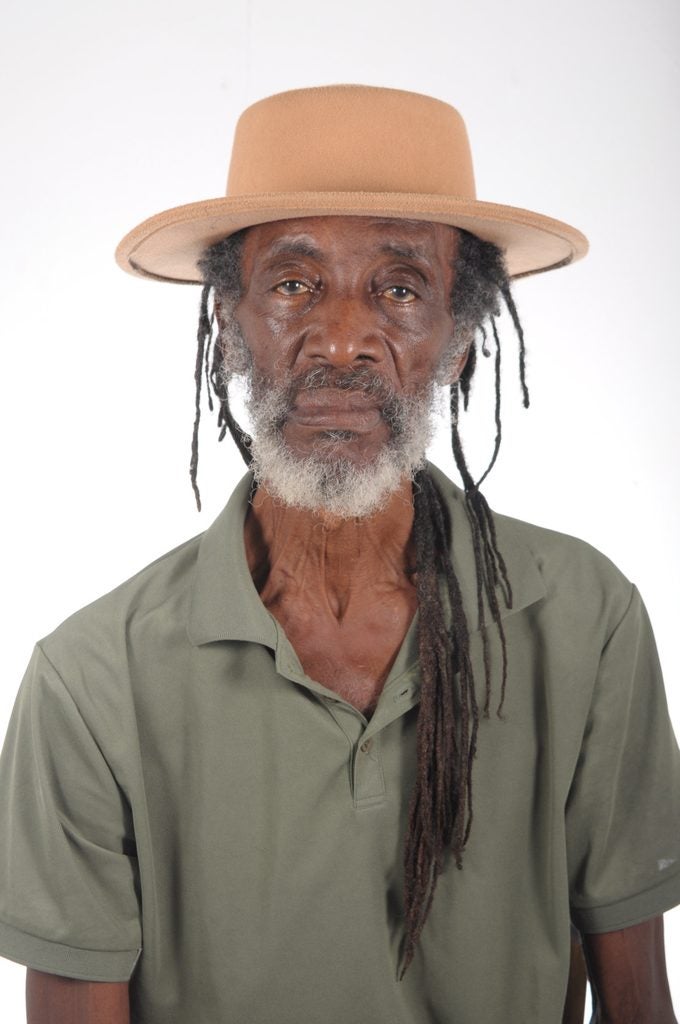
Junior “Spirit” Cottle is a political activist and president of the Saint Vincent and the Grenadines Cannabis Revival Committee. Since the 1970s he has led efforts to break with British colonialism and establish greater economic and political ownership and control for Vincentians. For the last four decades he has organized traditional cannabis farmers in Saint Vincent and the Grenadines against US drug eradication exercises, including Operation Weedeater. He is a member of the Caribbean Fairtrade Cannabis Working Group and sits on the Steering Committee of the Global Forum of Producers of Prohibited Plants.
Ann: From your perspective, how has the overarching goal of the 1961 Single Convention on Narcotic Drugs to ensure the health and welfare of humankind by eradicating the illegal drug market played out when it comes to traditional cultivators?
Spirit: The Single Convention was never designed to ensure the health and welfare of humankind. Instead, it was driven by the United States with the support of European powers. It was introduced to protect Western-centric, pharma-centric interests, while outlawing cannabis, opium poppy, and coca, as well as other so-called dangerous substances considered to have no medical use.
As a result, tribal communities based largely in Asia, Africa, and the Americas, including the Caribbean, who used such substances to treat their sick, and in their ceremonies, religious or otherwise, became the biggest victims. Poor and less developed countries, whose economies were dependent on this US–European bloc, were forced into voting in support of the Single Convention at the United Nations.
This treaty, which was officially signed by 73 nations, and later, in 1972, was ratified by 186, mandated the complete elimination of nonmedical uses of cannabis within 25 years, thus ignoring the human rights of a majority of humankind.
Today, 65 years later, more cannabis is being cultivated globally for reasons outside what is stipulated within the convention, which means that its use has increased exponentially. So it is clear that the big-stick approach has not worked. The convention and its mandate have been a miserable failure. Moreover, several nations have opted to pass laws in support of legal regulation.
For us, as traditional cultivators, the Single Convention has been one of our biggest nightmares. Our crops are being eradicated because of it, we have been robbed because of it, we have been imprisoned because of it, and we have lost many of our loved ones because of it.
Ann: What efforts did governments undertake in Saint Vincent and the Grenadines to comply with the Single Convention’s requirement that nonmedical uses of cannabis be eliminated within 25 years, and how did those measures affect cultivators and their communities?
Spirit: The main effort was large-scale eradication, including the 1998–1999 campaign in our mountains known as “Operation Weedeater.” This operation was led by the United States, with the involvement of the US military, the US Drug Enforcement Administration, regional security forces, and our own local police. This was our worst experience. It lasted about two weeks, and when it ended, three people had been killed by the military, millions of cannabis plants had been uprooted, and tons of cured marijuana had been destroyed. This destruction also extended to legal alternative agricultural crops and livestock that had served as a supplement to our livelihoods. The result was a scarcity of cannabis in Saint Vincent and the Grenadines that we had never experienced in our history—especially since becoming the second-largest producer in our region, after Jamaica.
This had a ripple effect in the region, impacting not only on Saint Vincent and the Grenadines but also neighboring territories to which our produce was being shipped and sold. For traditional cultivators and their families, the impact was devastating. Entire communities, especially in the north of the country, where most of the cannabis is grown, were made to suffer. You could see the waves of heavy sadness and shock upon the faces of those who resided there. It was not that eradication of our farms was something new. In the past, we had generally accepted that eradication would happen, but at this level it was unacceptable.
Ann: How did cannabis farmers respond to “Operation Weedeater,” and what broader social consequences followed from the loss of so many cannabis-based livelihoods?
Spirit: Under the leadership of the Committee of Traditional Cultivators, including Rastafarians, we protested against the exercise and mobilized hundreds of traditional cultivators and other supporters in the process, with calls for ending the eradication and for alternative livelihoods.
At the same time, the following months witnessed an increase in criminal activities and more serious crimes. One thing we have to recognize is that for a traditional cultivator, breaking the law was normal because cannabis cultivation had always been illegal—so this made this transition to more serious crimes relatively easy. This move into other forms of criminal activity can be especially tempting when people are trying to replace basic livelihoods that have been taken away.
Apart from an increase in crime, the nature of the crimes became more violent. For example, the choice of weapon rapidly changed from bottles and stones to knives and guns. Also, there was an increase in crack cocaine being sold on our streets as an alternative source of income for that which had been lost. Armed robberies increased, with the more daring and self-centered ones among us joining an army of robbers. Out of all this came a new kind of partnership between drug traffickers in urban and suburban communities and the rural traditional cultivators.
From there, hell broke loose. Today, Saint Vincent and the Grenadines is home to one of the world’s highest crime rates. According to recent data sets, our current homicide rate is 52 per 100,000—a fivefold increase from 1990, when it was 10 per 100,000. This statistic makes us a living example of the failed war on drugs.
We must continue to prove the war’s proponents wrong. We must continue to prove that the key to reducing crime is to improve people’s livelihoods. Let’s not forget that we are fighting international actors who want to continue their colonial and imperialist hegemony at all costs. And nothing less than an international response will defeat it.
Ann: We have seen a global trend toward the legal regulation of cannabis markets, including reforms in several Caribbean countries. In Saint Vincent and the Grenadines, those reforms have included an amnesty option for traditional cultivators, allowing them to enter the medical cannabis market without facing prosecution for previous illegal cultivation. To what extent has this produced meaningful opportunities for traditional cultivators, and what barriers have limited their participation?
Spirit: For the average traditional cultivator growing for the illegal market, the inputs for a successful crop are affordable. We harvest two or three times a year. Apart from the uncertainty of having a successful harvest eradicated by the drug interdiction forces or robbed, marketing is our biggest challenge. Nevertheless, despite the ups and downs, we can afford food, and it helps us take care of our families.
However, to grow for the legal medical market, the challenges are much more complex. One could expect as much, bearing in mind that we are producing a medicine to treat illnesses, and if not done in the correct environment, we could end up making patients worse. For example, the cultivation of medical cannabis requires strict operational inputs, including high-intensity LED or artificial lighting, climate control systems, clean growing media or amended soil, laboratory testing, and proper hygiene. All of these things require sums of money that are far beyond the reach of the average traditional cultivator. Some may say that forming cooperatives could help. This is certainly an option and perhaps the better way forward in principle, but many of us have little or no education, and that makes successful collective organizing challenging. It is not that we cannot work toward empowering ourselves, but doing so would require external support. In the meantime, those with the dollars are calling the shots. To fast-track traditional cultivators into the legal medical market, there needs to be greater attention to addressing the barriers to access.
Presently, medical cannabis is dispensed legally in Saint Vincent and the Grenadines. You can come as a tourist with a doctor’s prescription and purchase cannabis at a dispensary. While traditional cultivators have been given licenses to cultivate, the fact that we do not have the financial resources to do so automatically excludes us. As a result, those with more resources take control.
Ann: What options remain for traditional cultivators to earn a living from cannabis?
Spirit: The reality is that the illegal cultivation and marketing of cannabis continues to exist alongside the legal medical market. Traditional cultivators are forced to continue with illegal cultivation not because we are in favor of breaking the law but because otherwise our families would suffer. Illegal cultivation is our most viable option. The vast majority of us have yet to see any real changes in our lives following the legalization of medical cannabis.
The amnesty offered by the government is a brilliant gateway and the correct mechanism for facilitating our participation in the development process. But as I mentioned earlier, there is also an urgent need for financial support for traditional cultivators.
Ann: Has the amnesty meaningfully reduced the criminalization of traditional cultivators—or, better put, reduced the need for them to continue breaking the law?
Spirit: To some extent, it has, if we look at it from a regional perspective. But certainly not in a way where life has become much better for us. While we welcome the legislation allowing medical cannabis—and consequently the opportunity to become legal—one hand can’t clap. You have to put your money where your mouth is. Facilitating a reduction in traditional cultivators breaking the law will depend largely on additional legal reforms, including the creation of a legal recreational cannabis market with lower thresholds for entry.
As a result of the increased availability for legal medical cannabis, the demand for Vincentian weed from surrounding territories like Barbados, Antigua, and Saint Lucia—three of our primary traditional illicit markets—has been significantly reduced, thus forcing many traditional cultivators to seek alternative employment.
Ann: Much of the legal reform in the Caribbean has been limited to medical and ceremonial uses, leaving aside the issue of adult recreational use. What does this discrepancy mean for traditional cultivators and for the case for broader legalization?
Spirit: In the Caribbean, cannabis is cultivated, marketed, and consumed largely for recreation. And in Jamaica and Saint Vincent and the Grenadines, the region’s two largest producers, it is the principal source of income for traditional growers. It is the source from which we care for our families. It is therefore morally unfair and unjust to legalize cannabis for medical use only, at the exclusion of its recreational use, which is the principal source of a people’s livelihood.
However, no country in our region, as far as I am aware, has passed legislation legalizing recreational cannabis. Yes, there are provisions for personal use and consumption—for example, allowing consumption within the home—but recreational use in the broad sense has not been made legal. Even so, recreational use, as traditionally practiced, remains widespread despite its continued criminalization. So there is a broad cross-section of support across the region for the legalization of recreational use.
Ann: The US government has re-ignited the narco-terrorism narrative, notably through the bombing of suspected drug-trafficking boats in the Caribbean Sea, which has killed approximately 240 people killed and destroyed some 70 vessels. The United Nations Special Rapporteur on counter-terrorism and human rights has strongly condemned the US government, stating that these military strikes amount to unlawful killings and potential crimes against humanity. How does the renewal of this narrative and the United States’ campaign affect the situation of traditional cultivators?
Spirit: It affects us traditional cultivators because it hinders our movement from island to island and, in the process, disrupts the trade of our produce. It affects us because it kills our fellow traditional cultivators. It affects us because it prevents us from fishing in our own waters to supplement to our livelihoods.
As small traditional cultivators, we are not narco-terrorists. We don’t fight governments as the word implies. We are not connected to drug cartels that have the resources to undertake such smuggling operations. We are just ordinary traditional cultivators who cultivate cannabis as a means of caring for our families. Yet we are indiscriminately bombed under the guise of fighting terrorism and to justify US planned invasion into other people’s territories. Look at the ones who are being killed. Look at their mode of transportation—small fishing boats. Doesn’t that tell us something to the contrary? Narco-terrorists, as defined, are terrorist organizations that use terror tactics like bombings and killings to stop governments from enforcing anti-drug laws, and who sell illegal drugs to get money for weapons and operations. Do we look like people of such character? Ask our fellow villagers. Ask around in the communities where we live. Talk to our respective governments, as well as to our respective anti-narcotic squads, which run regular surveillance on our movements. The funny thing is that while the United States bombs and kills small fisherman under the guise of fighting narco-terrorism, the very actors it accuses of being at the root of the problem—the big cartels—can simply use their cash flow to reach their destinations through far more sophisticated means.
So the United States is not really bombing its supposedly intended targets but rather small and ordinary fishermen, who, incidentally, also include small traditional cultivators.
Ann: What is the most urgent reform needed with respect to the international drug control system?
Spirit: To end the international prohibition of the cultivation, use, possession, and marketing of opium, coca, and cannabis, and to replace it with policies based on human rights and public health.
Ann Fordham is an expert on international drug policy and human rights. She stepped down as executive director of the International Drug Policy Consortium in July 2026 and is a guest editor of this special section on health, rights, and drug control.
Please address correspondence to Ann Fordham. Email: fordham.ann@icloud.com.
Competing interests: None declared.
Copyright © 2026 Fordham. This is an open access article distributed under the terms of the Creative Commons Attribution-Noncommercial License (http://creativecommons.org/licenses/by-nc/4.0/), which permits unrestricted noncommercial use, distribution, and reproduction in any medium, provided the original author and source are credited.